Do Mushroom Grow Kits Really Work? My Honest Experience
I wanted to see if those grocery store mushroom kits actually work—spoiler: they do. Check out my quick grow log.
GROWING
5/13/20254 min read
Do Mushroom Kits Really Work? My Experience with a Beginner Kit
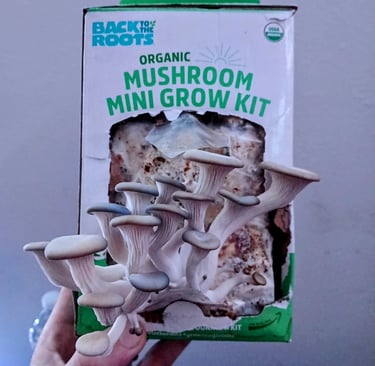
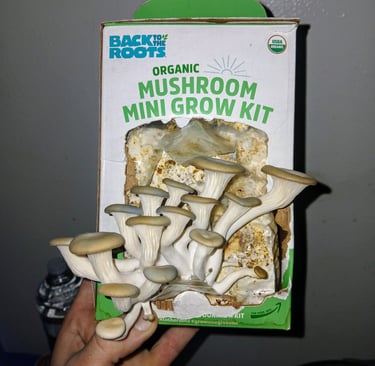
If you’ve ever seen one of those mushroom grow kits at the store and wondered if they actually work, I decided to test one out for myself. I grabbed a Back to the Roots kit—something simple and beginner-friendly—to see what would happen.
Why I Bought My First Mushroom Grow Kit
I bought my first mushroom grow kit around 2020, right as COVID was starting. At the time, I had been experimenting with growing microgreens and wanted to learn how to grow more of my own food. While I was out running errands, I saw a Back to the Roots Grey Oyster Mushroom Kit and decided to give it a try.
One reason was simple curiosity. Where I live in Southern California, grocery stores mostly sell white button mushrooms. It's rare to find fresh oyster mushrooms or many of the other gourmet varieties, so I wanted to grow something I couldn't easily buy locally.
The other reason was food security. I liked the idea of learning another skill that could help me grow some of my own food. Looking back, that little grow kit ended up introducing me to mushroom cultivation as a hobby that I've continued for years.
Getting Started
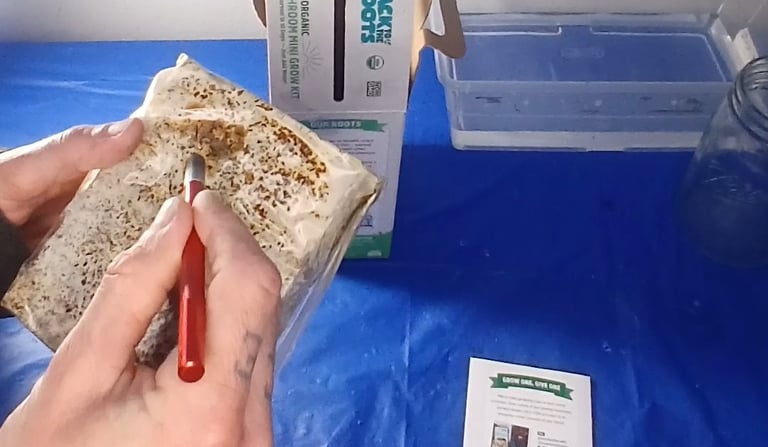
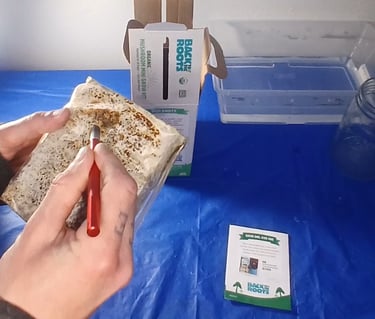
Setup was quick. I cut an X into the front of the block as directed, soaked it in water overnight, and then placed it near a window with indirect light. From there, I misted the block a couple of times a day. I’ve used dozens of kits since then, and while not every one was perfect, they all taught me something about how mushrooms respond to their environment. Even small differences in temperature or airflow can change how your flush develops.
Growth and Results
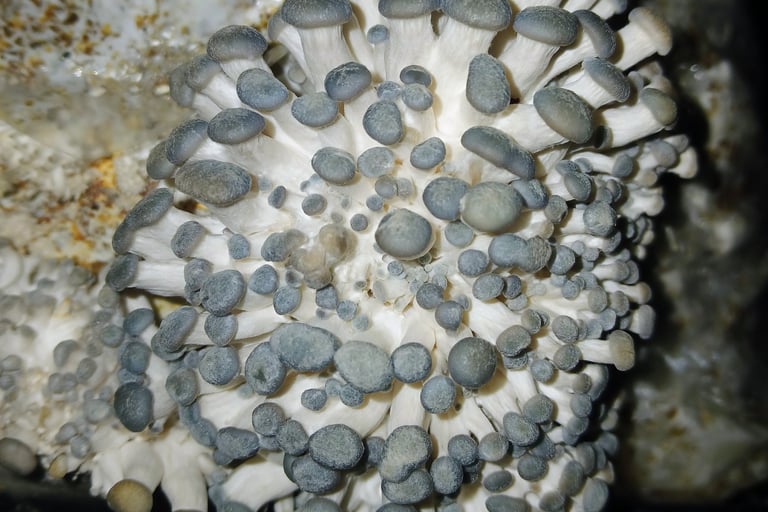
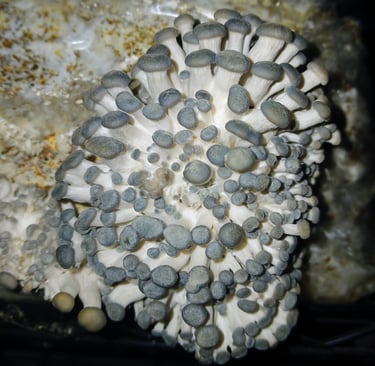
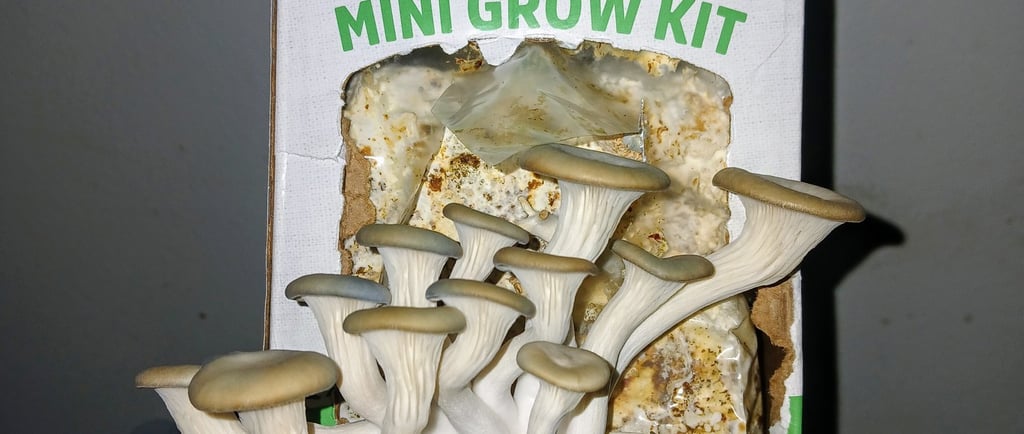
Within about a week, I started seeing pins, tiny baby mushrooms pushing through the cut. A few days later, I had a full flush of oyster mushrooms ready to harvest.
What I Learned from My First Grow Kit
Watching mushrooms grow for the first time was one of the most interesting parts of the experience. Seeing tiny pins develop into full clusters over just a few days gave me a much better understanding of how mushrooms grow than reading about them ever could.
I also learned that mushrooms don't need much light to grow. Unlike plants, mushrooms are fungi, and they're actually more closely related to animals than plants. They don't use sunlight to make energy, so a bright room with indirect light is usually all they need.
More than anything, the grow kit gave me the confidence to keep learning. It showed me that growing mushrooms wasn't as difficult as I had imagined, and it eventually led me into making grain spawn, agar, and bulk substrate.
Common Mistakes with Mushroom Grow Kits
Not every kit takes off on the first try. Temperature swings, dry air, or not enough misting can all stall growth. If you don’t see pins within two weeks, don’t give up—try lightly scraping the surface to rehydrate it or move the kit somewhere with more airflow and indirect light.
I’ve found that even kits that looked totally dead often came back strong after a quick soak and humidity boost. Oyster mushrooms, in particular, can surprise you with a second flush once conditions are right. For more humidity tips, check out my full post on using a humidifier for your mushroom kit.
Are Mushroom Grow Kits Worth It?
In my opinion, yes.
For around $20 to $30, you're getting much more than just a box of mushrooms. You're getting the experience of watching them grow from tiny pins to a full harvest, and you'll quickly learn how humidity, fresh air, and temperature affect mushroom growth.
Grow kits are also a great way to find out if mushroom growing is a hobby you'll actually enjoy before spending money on equipment and learning more advanced techniques.
If you've never grown mushrooms before, I'd start with an oyster mushroom kit. Once you've successfully grown one kit, you can always branch out into other species like Lion's Mane or Chestnut mushrooms, or eventually learn how to make your own grain spawn and bulk substrate.
Final Thoughts
ooking back, buying that first mushroom grow kit was one of the best introductions I could have had to mushroom cultivation. It gave me the confidence to keep learning and eventually led me to growing mushrooms from scratch.
If you're more serious about cultivation, though, you’ll eventually want to move into grain spawn and bulk substrate. That’s where the real yields are—but for a first experience, this was a win.
Having trouble getting your kit to fruit again? Check out my new guide, “Rescuing Your Mushroom Grow Kit,” a simple step-by-step ebook that shows you how to revive stalled or dried-out kits and get multiple flushes.