Is My Agar Contaminated? How to Identify and "Outrun" Mold
Don't toss your agar jars yet! Learn how to identify the "Green Monster" (Trichoderma), bacteria, and cobweb mold. Mark from Inland Mushrooms shares his "Outrun" technique to save your gourmet cultures using surgical transfers—even if you're dealing with a dull blade.
GROWING
2/19/20262 min read
Is That Contam? How to Outrun Mold and Save Your Mushroom Cultures
Contamination can be frustrating when you first start growing, and even later on. But it’s something you just need to accept. You’ll get better and get it less, but even long-time growers still get it. Don’t let it discourage you.
Agar is a great way to catch these "glitches" before they ruin a whole batch of grain. But it can also be annoying if you keep getting hit with it.
My Recent Mistake: The "Flame-Sterilized" Craft Knife
I’ll be real with you—I think I know why my recent plates got messy. I ran out of fresh scalpel blades, so I’ve been using my craft knife and just flame-sterilizing the blade between jars.
The Lesson: Even if you get that blade red-hot, a dull or pitted blade can have microscopic nooks where bacteria can hide. If you aren't using a fresh, surgically sharp edge, you’re playing with fire. If you’re serious about your gourmet grow, don't skimp on the blades.
How to "Outrun" Contamination (The Rescue Transfer)
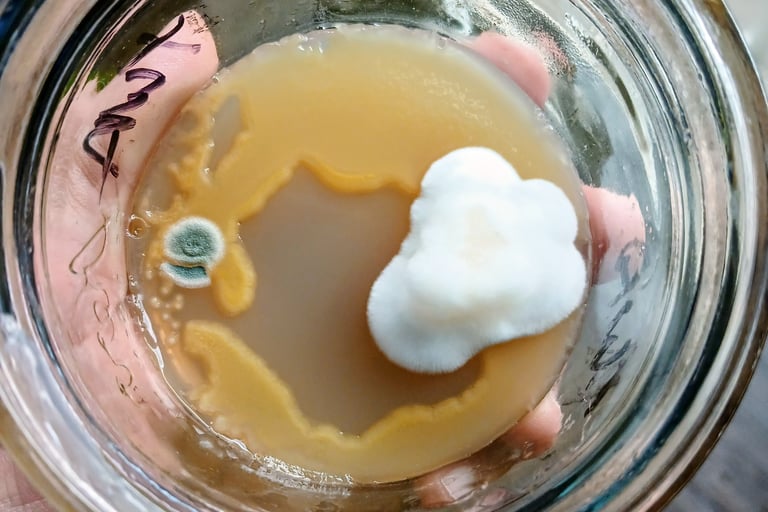
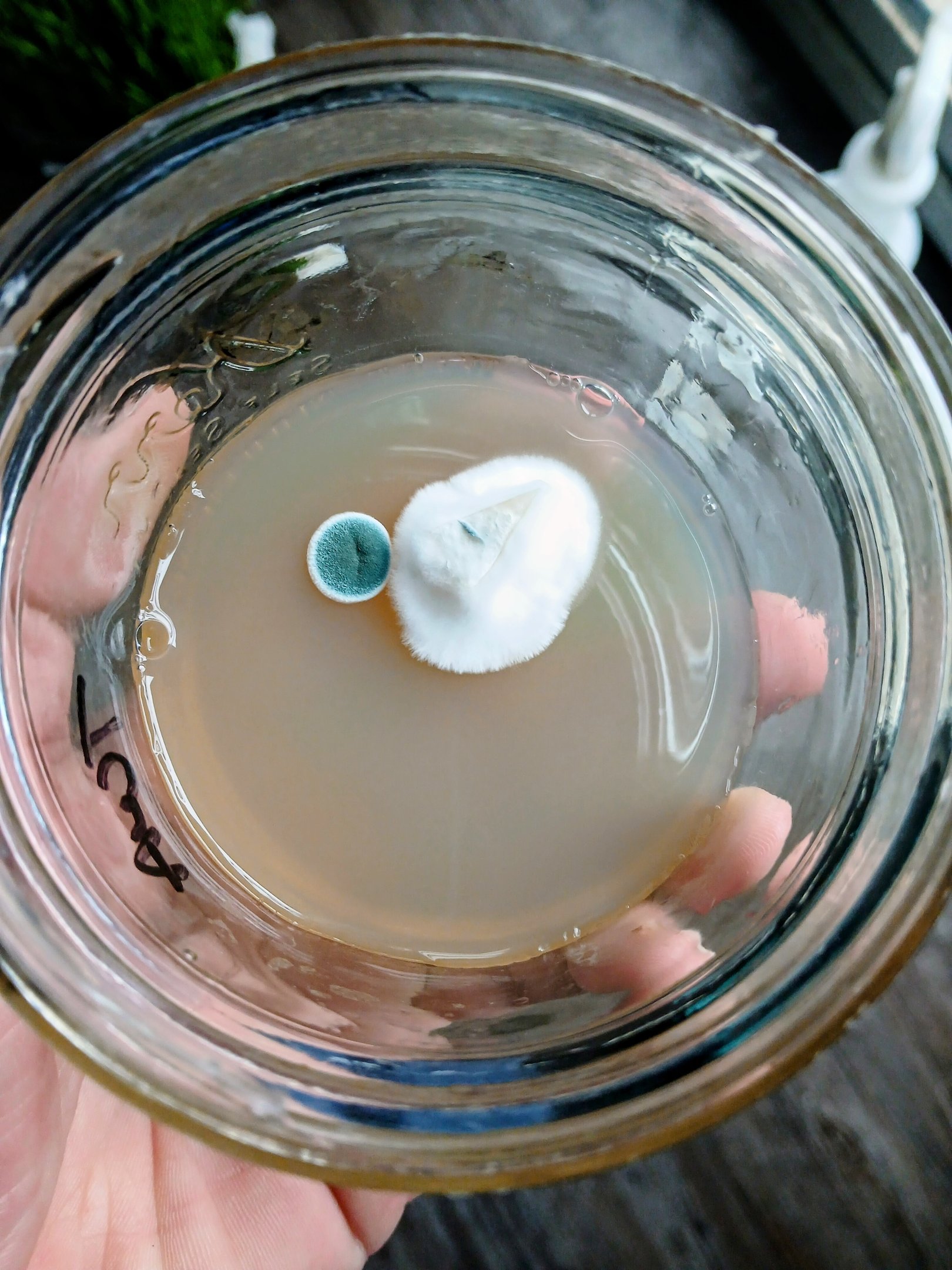
When you see a spot of green mold or a slimy bacterial patch, your first instinct is to toss the jar. Don't do it yet. If there is healthy white mycelium growing away from the mess, you can "outrun" it.
In the mycology world, we call this a Leading Edge Transfer. Here is how you do it:
Identify the Cleanest Spot: Look for the fastest-growing "fingers" (rhizomorphic growth) that are furthest away from the contamination.
Surgical Strike: Using a fresh flame-sterilized blade, cut a tiny 1x1cm square from that leading edge.
The Move: Transfer that tiny square into a fresh, clean agar jar.
Repeat: Sometimes it takes 2 or 3 transfers to completely leave the contamination behind. Each time you move the mycelium to a fresh "clean" environment, you are essentially outrunning the mold.
The No-Pour Advantage
I do all my agar work in No-Pour Jars. It’s way easier and cheaper than buying pre-poured plastic plates. If you want to see exactly how I make them so you can stop wasting money on gear, check out my post here: How to make no pour agar.
Common Contams I’m Dealing With Right Now:
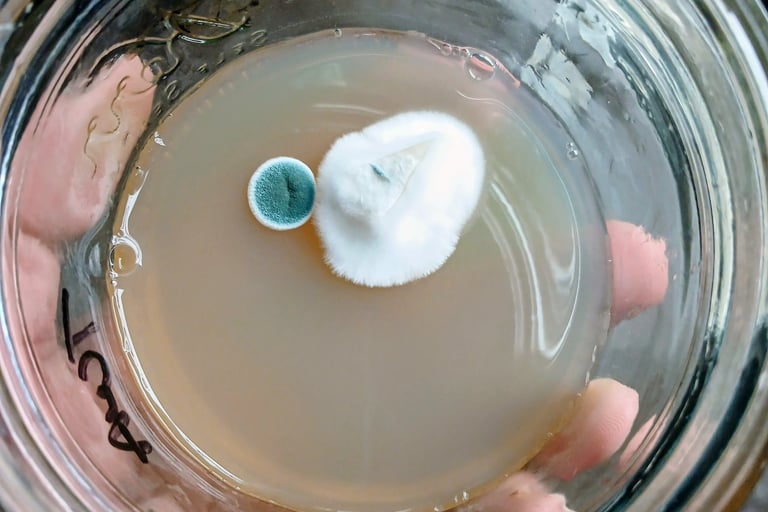
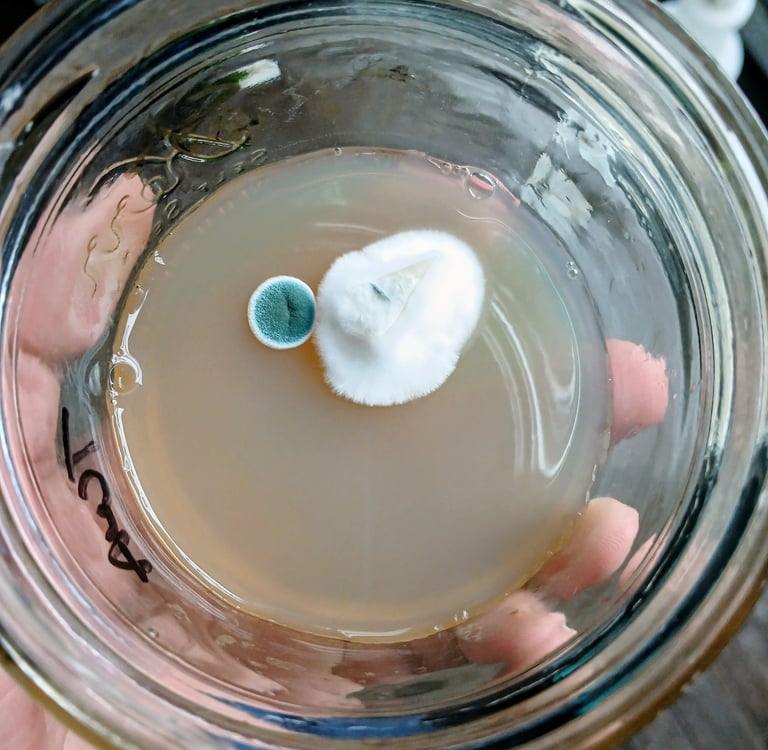
The Green Monster (Trich): It starts white and fuzzy but turns forest green. If it’s green, it’s already dropping spores. Move fast!
Wet Spot (Bacteria): Looks like greasy puddles or milky spots. It often smells "sour" or like rotting fruit.
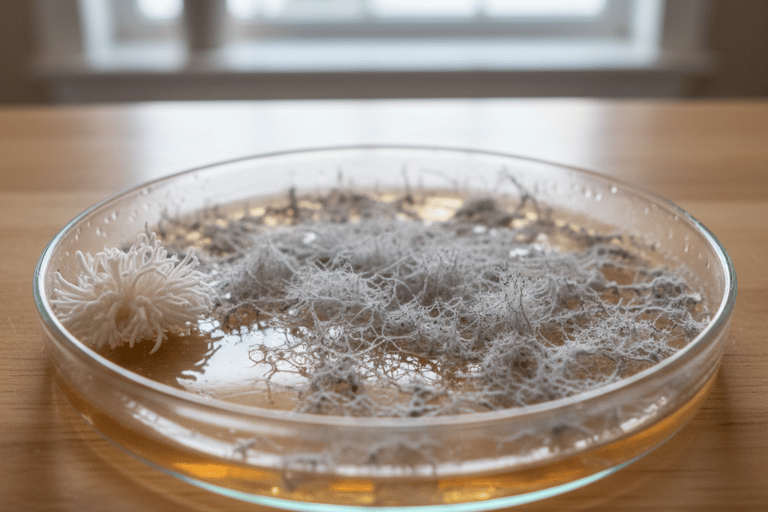
Cobweb Mold: Very thin, gray, and wispy. It grows 10x faster than mushroom mycelium.
Don't Quit
Every contaminated jar is just a lesson. Whether it was a dull blade or a slip in your sterile technique, just take the clean part, transfer it, and keep moving.