When to Break and Shake Grain Jars (And What Happens If You Do It Wrong)
Learn when to break and shake grain jars, why timing matters, and what happens if you do it too early or too late. Beginner-friendly mushroom growing guide.
GROWING
12/21/20255 min read
The Best Time to Break and Shake Your Mushroom Grain Jars
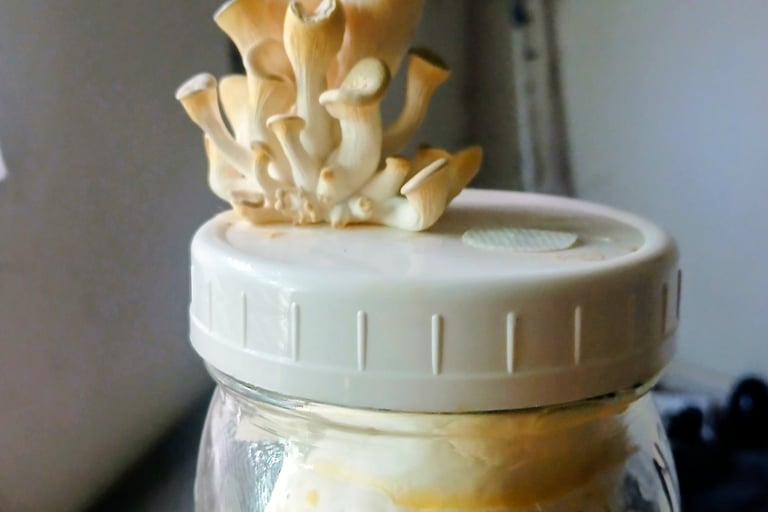
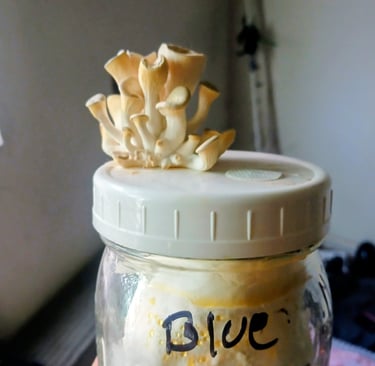
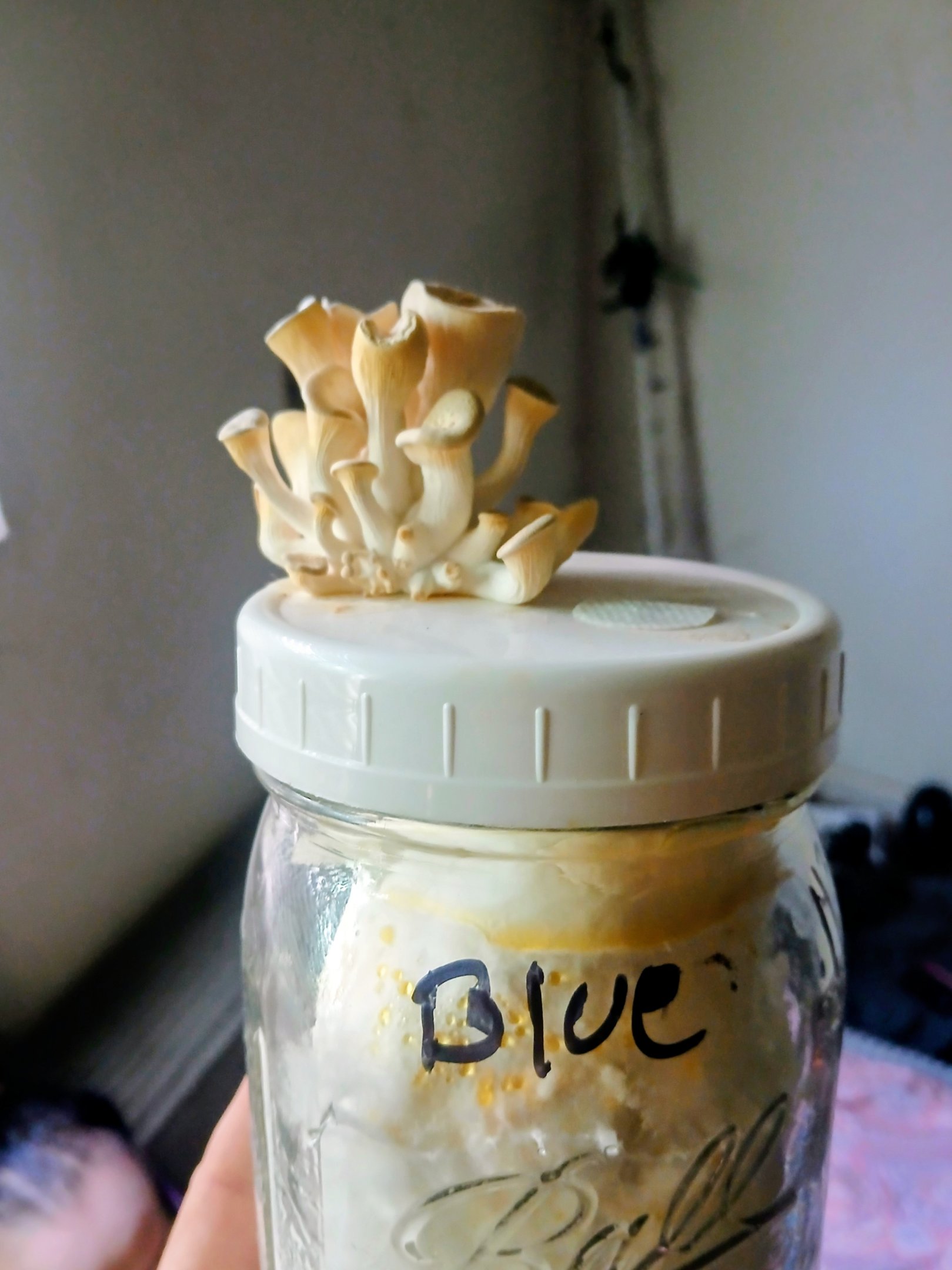
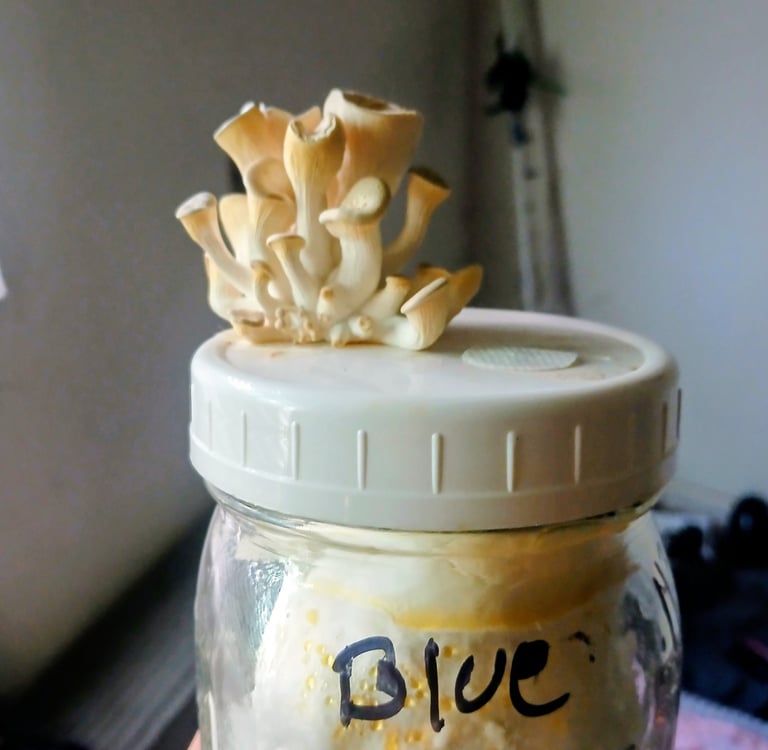
If you have ever wondered what happens if you just leave a grain jar alone for too long, look at this photo. These Blue Oysters were so ready to grow that they actually pushed right through the filter on the lid because I missed the timing for the break and shake.
While it looks cool, this is exactly what we want to avoid. Knowing when to break and shake your grain jars is just as important as knowing how to do it. If you do it too early, you can actually stall the whole process. If you do it too late, the jar becomes a dense block that is nearly impossible to break apart evenly.
Here is how to hit that sweet spot so you get faster colonization and avoid jars that look like mine.
Break and Shake Too Early: Why It Stalls a Jar
When mycelium first starts growing, it is still fragile. Early on, it is busy building connections between grains and establishing momentum. If you shake too early, before the jar has enough healthy growth, you can end up breaking those early connections and spreading weak mycelium instead of strong growth.
This often causes the jar to stall for days or even longer. This is especially common with spore syringes, which already take longer to establish than liquid culture.
Rule of thumb: If you are only seeing a few small white spots, it is definitely too early.
Break and Shake Too Late: Why It’s Less Effective
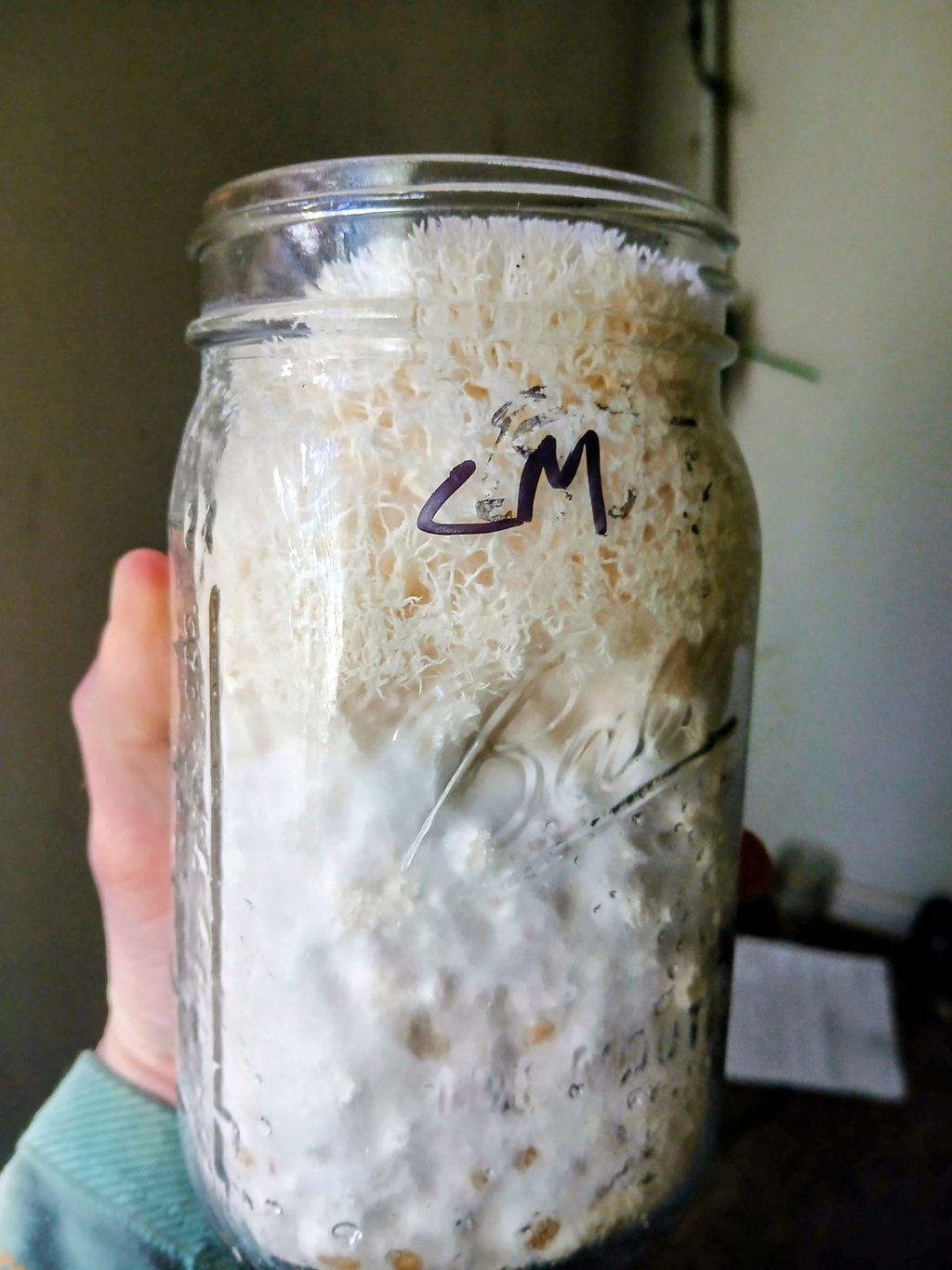
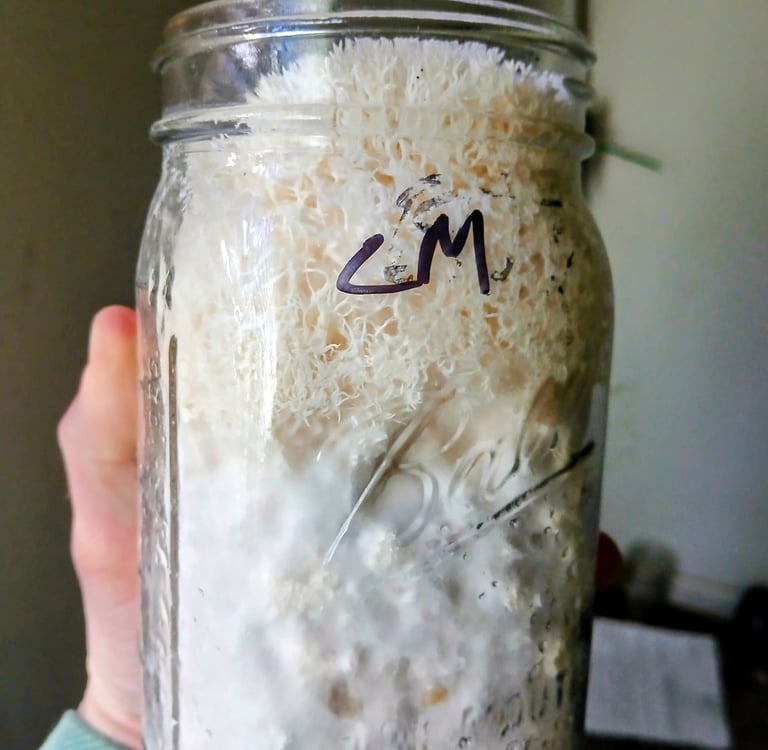
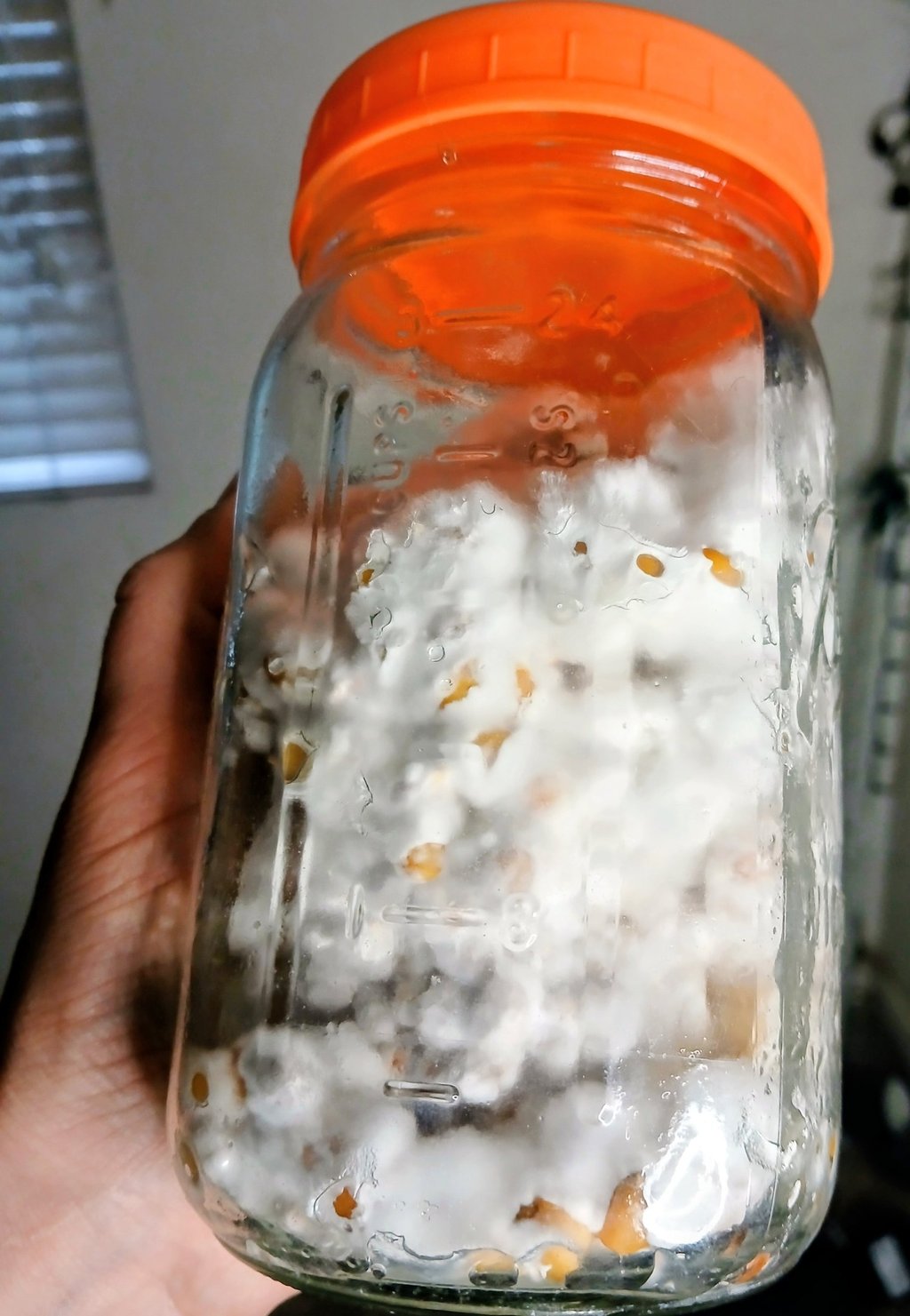
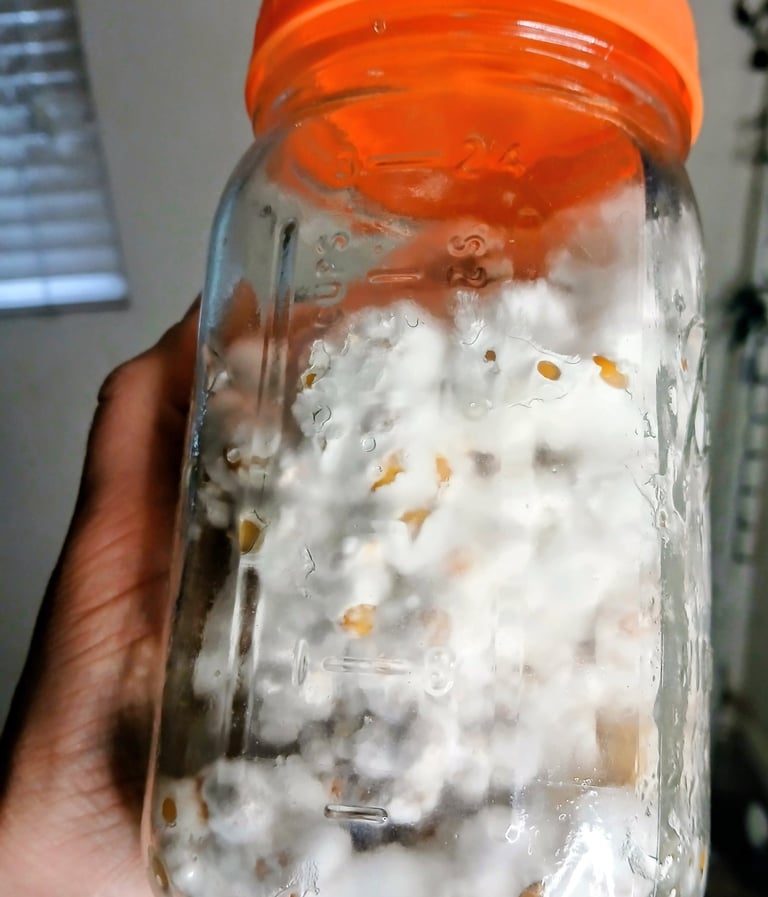
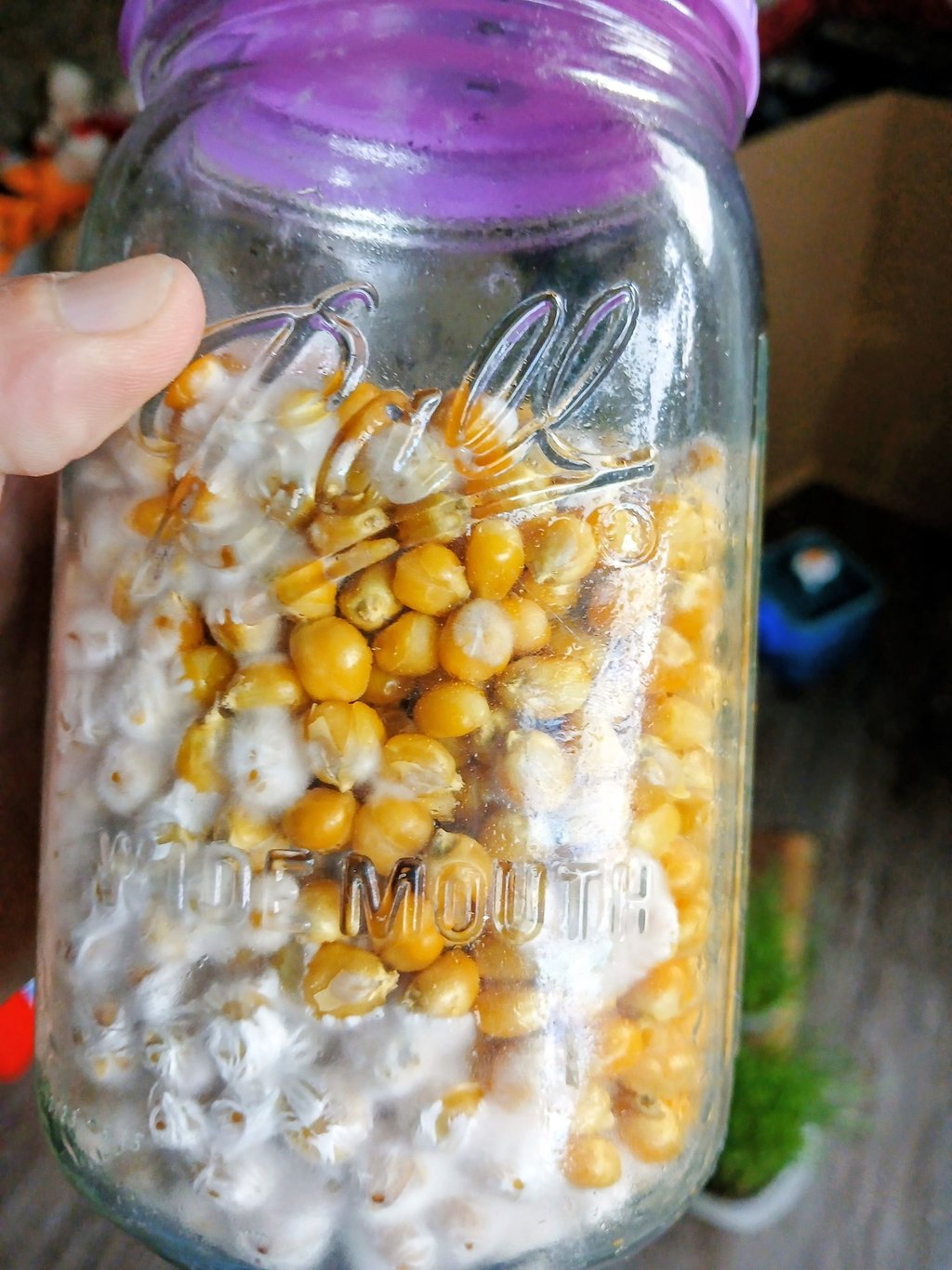
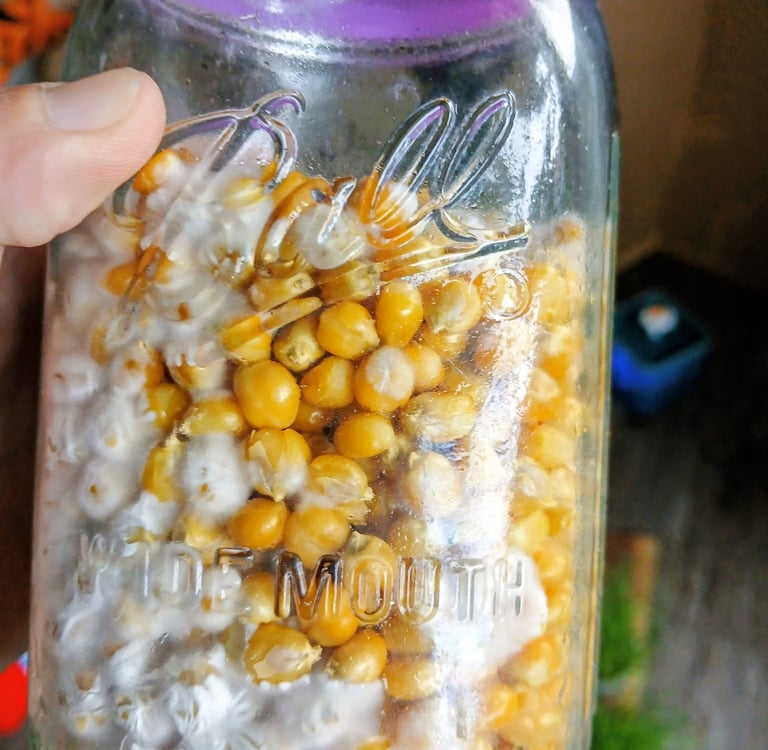
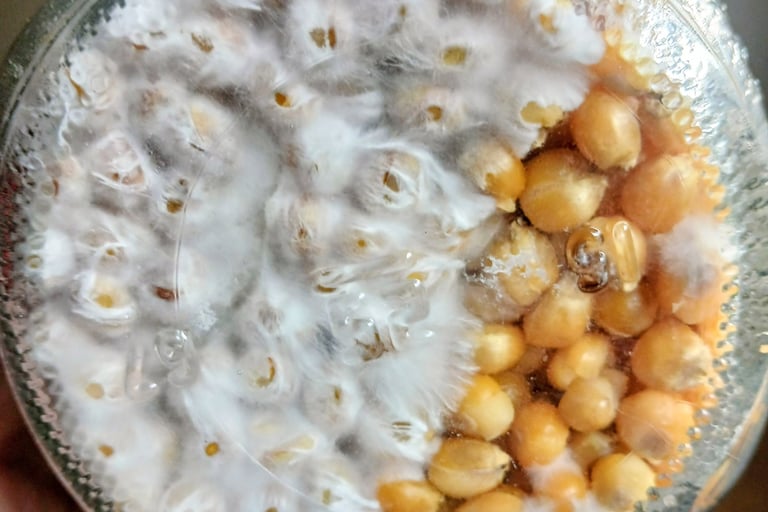
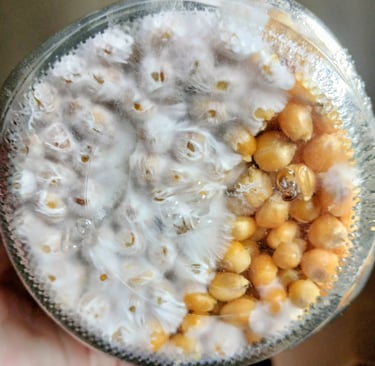
This jar was shaken too late, causing large clumps of colonized grain and visible gaps along the glass — but as long as the mycelium is healthy, jars like this can still finish colonizing, just a bit less evenly.
On the other end of the spectrum, waiting too long makes the jar harder to work with. Fully colonized jars become dense and rubber-like. They get very hard to break apart.
When you shake at this stage, the grain tends to break into big chunks instead of spreading out grain-by-grain. This actually slows down the recovery time. It isn't a total failure, but it is not ideal for speed. If you wait way too long, you end up with "invitro fruiting" like the Blue Oysters shown at the top of this post.
Another thing worth knowing is that strain plays a big role in how easy a jar is to break up. Some strains produce light, airy mycelium that shakes apart easily even if you're a little late. Others — especially dense or aggressive strains, can turn into a nearly solid block fast. If you're working with a strain you haven't grown before, play it safe and shake closer to 20-25% rather than waiting for 30%.
One thing that helps regardless of strain is adding a teaspoon of gypsum per quart when you prep your grain. It keeps kernels from sticking together and makes the whole jar much easier to break up when the time comes. I use this gypsum on Amazon— inexpensive and lasts forever.
❓ What Happens If You Break and Shake Too Early or Too Late?
If you're staring at your jar wondering whether you messed up the timing, you're not alone. This is one of the most common beginner questions.
Break and shake too early:
The mycelium is still weak and hasn't built strong connections yet. Shaking at this stage can cause the jar to stall because you're spreading thin growth instead of strong, established mycelium.
Break and shake too late:
The grain becomes dense and rubbery. When you finally shake it, it breaks into large chunks instead of spreading grain-by-grain, which slows recovery.
If your jar still shows healthy white growth after a few days, you're usually fine. If growth completely stops, contamination may be the real issue.
What Happens If You Never Break and Shake?
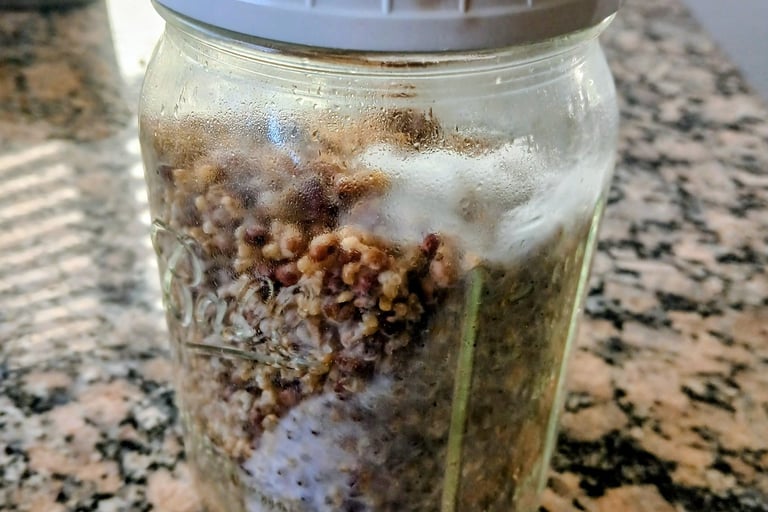
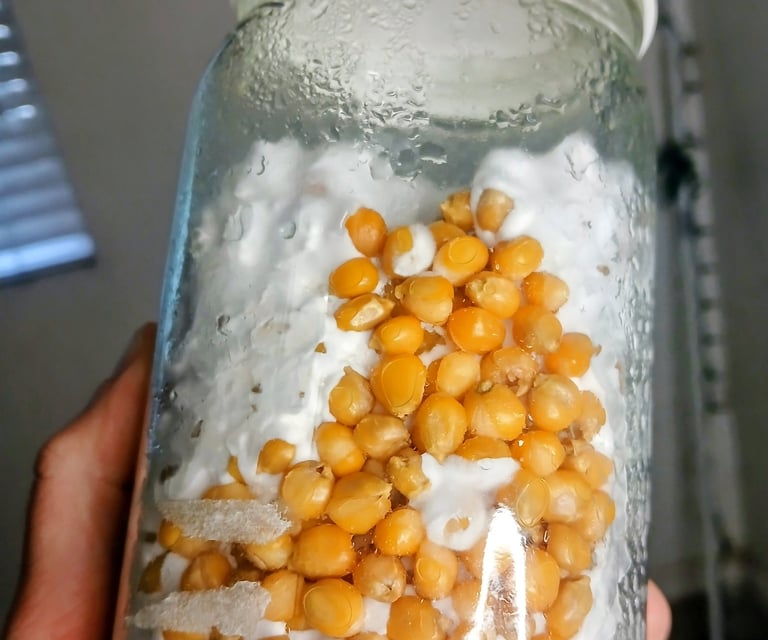
This jar was never shaken. It is still colonizing successfully, but you can see how one area lags behind — a good example of how skipping break and shake slows things down but doesn’t necessarily ruin the jar.
You can let a jar colonize without shaking at all. The mycelium will slowly spread from grain to grain until the jar finishes on its own.
However, this takes significantly longer and often leads to uneven colonization like the jar shown below. Notice how most of the jar is white, but one stubborn patch is still uncolonized. This happens because the mycelium must physically grow across every grain instead of being redistributed throughout the jar.
Skipping the break and shake isn't a failure, it just means slower colonization and longer wait times. For growers who aren’t in a rush, it still works. But if your goal is speed and even growth, shaking at the 25–30% stage makes a big difference.
The Sweet Spot: When to Break and Shake
The best time to break and shake is when the jar is about 25% to 30% colonized. At this stage, the mycelium is strong enough to recover quickly. Breaking it up now creates tons of new growth points, and colonization usually speeds up dramatically after the recovery.
Keep in mind that after shaking, it is totally normal for growth to look like it has paused for a couple of days. That is fine. If the mycelium is healthy, it will bounce back stronger.
If you’re not sure how far along your jar should be before shaking, check out our guide on how long grain jars take to colonize and what to watch for, which breaks down the full timeline from inoculation to full coverage.
Troubleshooting: What if the jar doesn't recover?
If it has been four or five days and you see zero new white growth, there is a good chance something went wrong. Usually, a jar that fails to bounce back is a sign of hidden contamination like "wet spot" bacteria.
Before you shook the jar, the mycelium might have been keeping the bacteria cornered. Shaking it spread those bacteria to every single grain. If the grain looks greasy or smells sour, it is best to move it away from your healthy jars and start over.
This post contains Amazon affiliate links. If you purchase through them I may earn a small commission at no extra cost to you.
Honestly one of my favorite parts of this whole hobby is just watching mycelium take over a jar of corn. There's something almost meditative about it, this white web slowly creeping across each kernel, building something alive. If you're new to growing, you'll know exactly what I mean the first time you see a healthy jar colonizing. It never really gets old.