How to Tell If Your Grain Jar Is Contaminated (Before You Waste a Grow)
Learn how to tell if your grain jar is contaminated before spawning to bulk. See the most common contamination signs (green mold, bacteria, black spots) and how to tell mycelium vs mold—so you don’t waste a whole grow.
GROWING
1/18/20265 min read
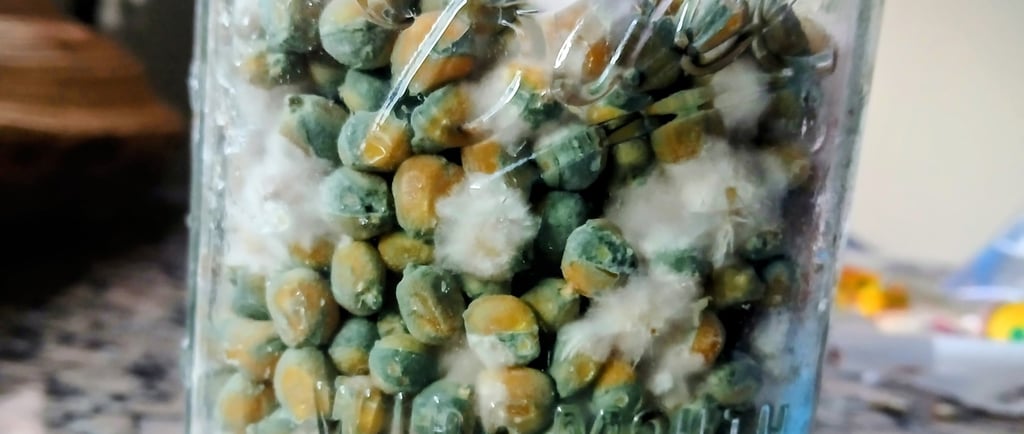
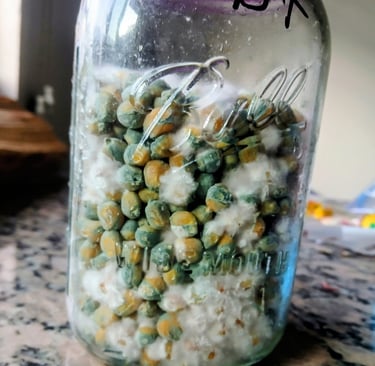
How to Tell If Your Grain Jar Is Contaminated (Before You Waste a Whole Grow)
Contamination can ruin the best grow plans.
You do all the work, sterilize jars, prep grain, set up your still air box, inoculate everything, and then you wait patiently... just to see that nasty green show up one day.
What makes it worse is contamination doesn't always look bad right away. A lot of the time you'll see white growth and think, "Hell yeah, mycelium," but it can actually be mold starting out. Then you notice a slight green tint... or you don't notice at all... and you spawn it to bulk.
Next thing you know the tub stalls out, smells off, or contaminates hard.
I was honestly lucky on my first grow because I didn't get contamination. Money was really tight back then, and if my first attempt got ruined, I probably would've taken it as a sign like, "Yeah... maybe this isn't for me." But my first grow worked, I built confidence, and by the time contamination showed up later, I wasn't discouraged, I knew it was just part of growing.
The good news is once you learn what to look for, contamination becomes way easier to spot early. And catching it early saves you time, money, and stress.
In this post, I'll show you exactly what contamination looks like in grain jars, how to tell it apart from healthy mycelium, and what to do if you find it.
Why It Matters: A Bad Jar Can Ruin Everything
A contaminated grain jar doesn't just fail by itself. It can contaminate your still air box or grow space, contaminate your tools, contaminate your other jars, contaminate your monotub and substrate, and waste weeks of waiting. So the sooner you spot a bad jar, the better.
Quick Rule: Healthy Mycelium Stays White
This is the simplest rule you can follow: healthy mushroom mycelium stays white. If it turns green, gray, black, or pink/orange, you're dealing with contamination. There are rare cases of slightly off-white growth, but in general, white equals right.
What Healthy Grain Spawn Looks Like
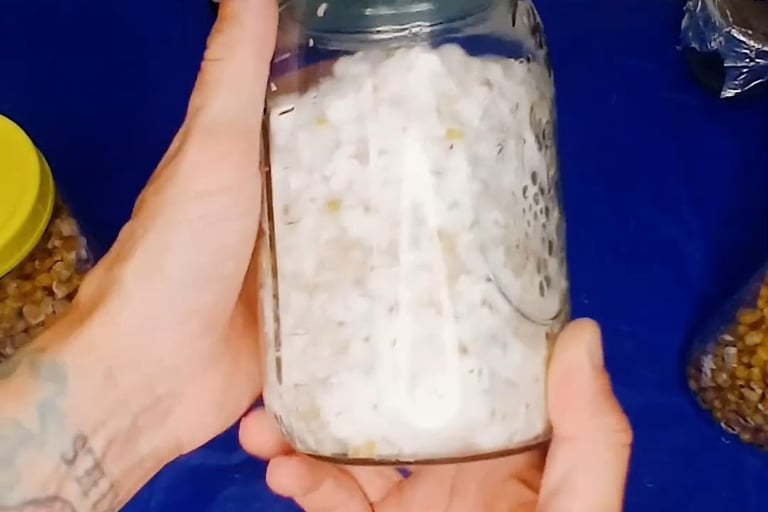
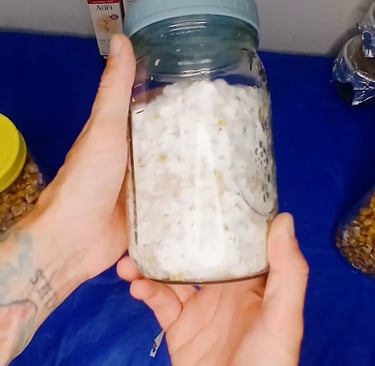
Healthy spawn is usually bright white, ropey (rhizomorphic) or fluffy (tomentose), spreading outward in clean colonies, and gradually taking over grain kernels evenly. It should look alive and consistent — not patchy, slimy, or dusty.
Signs your jar is healthy: white growth only, growth expands steadily each day, smells fresh or earthy or mushroomy if you ever open it outside, and grain isn't overly wet or slimy.
The Most Common Contamination: Green Mold (Trichoderma)
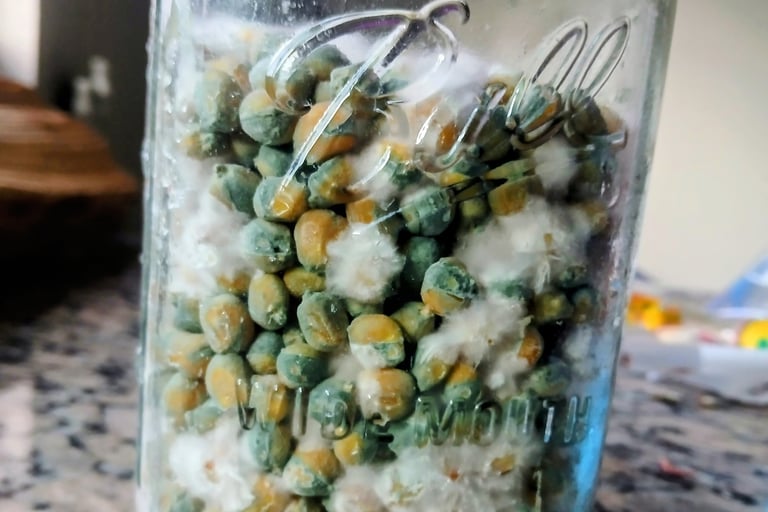
The number one contamination you'll see in grain jars is green mold, often called trich. You'll usually see it as white growth at first (easy to confuse), then a pale green tint, then bright green patches that spread. The key giveaway is mycelium stays white and trich turns green. Once it's green, it's releasing spores and can spread easily.
Common Grain Jar Contamination Signs (Checklist)
Here's a simple checklist you can use every time you check your jars.
Green or Blue-Green Tint — If you see green dust, green kernels, or turquoise/blue-green fuzz, that jar is contaminated. Don't shake it. Don't open it indoors.
Gray, Wispy, Fast Growth — Some molds look light gray, airy, and thinner than mycelium. Often they spread faster than mushroom mycelium. If the growth looks weirdly thin and webby, be suspicious.
Black Spots — Black is never good in spawn. Black contamination can sometimes look like pepper flakes, soot specks, or dark blotches. Dispose of it carefully.
Pink or Orange Growth — Pink, salmon, or orange patches can happen too. That's contamination.
Slimy or Wet Grain (Bacterial Contamination) — This one is harder to spot because it might not be colorful. Signs include kernels look sweaty, puddling liquid, greasy looking grain, jar colonizes very slowly, and mycelium looks weak or stops spreading. Sometimes bacterial jars smell sour when opened, but don't open it inside to test smell.
Colonization That Stalls Out — If you see the jar stall at like 20–50% and it just doesn't finish, that can mean bacteria, hidden mold, improper moisture, or weak culture. Not every stalled jar is contaminated, but it's always a red flag.
Mycelium or Mold? How to Tell the Difference
This is what tricks beginners the most: contamination can look white at first. So how do you tell?
Healthy mycelium usually spreads evenly from inoculation points, looks consistent, and slowly takes over. Mold often shows up in random spots, looks patchy or fuzzy in a different way, and changes color over time.
If you're unsure, the safest move is wait 24–48 hours and check again. Healthy mycelium stays white. Mold often reveals itself quickly.
Should You Shake a Jar to Check?
Short answer: no — not if you suspect contamination. Shaking spreads contamination faster, makes the whole jar worse, and can make it harder to visually identify. Shaking is good only when the jar is clearly healthy and has colonized enough to break up.
What To Do If You Have a Contaminated Jar
If you spot contamination, isolate the jar and move it away from your other spawn ASAP. Don't open it indoors. Seriously — don't open it in your house. Don't toss it in your room trash because if the jar is moldy, you'll spread spores.
Dispose safely by throwing it away sealed in a bag, burying it outdoors (some people do this), or dumping it outside far from your grow area. Clean your workspace after — if you handled the jar, wipe down surfaces, wash hands, and clean your SAB area.
Can You Save a Contaminated Jar?
Most of the time, no. There are some advanced techniques for saving genetics like cloning a clean mushroom, taking tissue samples, or agar isolation transfers. But for grain spawn? Once it's contaminated, it's usually not worth risking the rest of your grow. Especially if you're growing inside a home or apartment.
Final Thoughts: Contamination Happens to Everyone
If you're dealing with contamination right now, just know it doesn't mean you're bad at growing. It happens to everybody, beginners and experienced growers.
The goal isn't to never get contamination. The goal is to reduce it over time, catch it early, keep your clean jars clean, and protect your grow area. And the fact you're learning to identify it means you're leveling up.
Quick FAQ
What's the most common contamination in grain jars?
Green mold (often trichoderma) is the most common.
Does contamination always smell bad?
Not always. Some contamination has little smell until it gets worse — and you shouldn't open jars indoors to smell test anyway.
Can I spawn a jar that's only slightly contaminated?
I wouldn't. A small amount in a jar can become a full disaster in substrate.