How to Initiate Fruiting for Oyster Mushrooms (Beginner Step-by-Step Guide)
Learn how to initiate fruiting for oyster mushroom blocks with this simple step-by-step guide. Covers when to start, where to cut the bag, humidity tips, pinning signs, and common mistakes to avoid.
GROWING
11/27/20253 min read
How to Initiate Fruiting for Oyster Mushrooms (Beginner Step-by-Step Guide)
If you’ve never fruited mushrooms before, this part can feel weirdly stressful — because you did all the hard work already, and now you don’t want to mess it up at the finish line.
Maybe you:
just bought an oyster mushroom grow kit, or
made it all the way to a fully colonized block/bag for the first time (huge win)
Either way, initiating fruiting is the step where you “tell the mushrooms” it’s time to start producing.
The good news: oyster mushrooms are one of the easiest gourmet mushrooms to fruit, and you don’t need a fancy lab setup to get a great flush.
In this post I’ll walk you through the exact steps I use.
What does “initiating fruiting” mean?
Initiating fruiting basically means switching the conditions from colonization mode to fruiting mode.
Colonization likes:
warm temps
less fresh air
sealed environment
Fruiting needs:
fresh air exchange (FAE)
humidity
stable temps
some light (not direct sun)
Oysters especially crave fresh air. If oysters don’t get enough FAE, they’ll still grow — but they’ll look funky (long stems, tiny caps).
When to start fruiting (timing matters)
Start fruiting when:
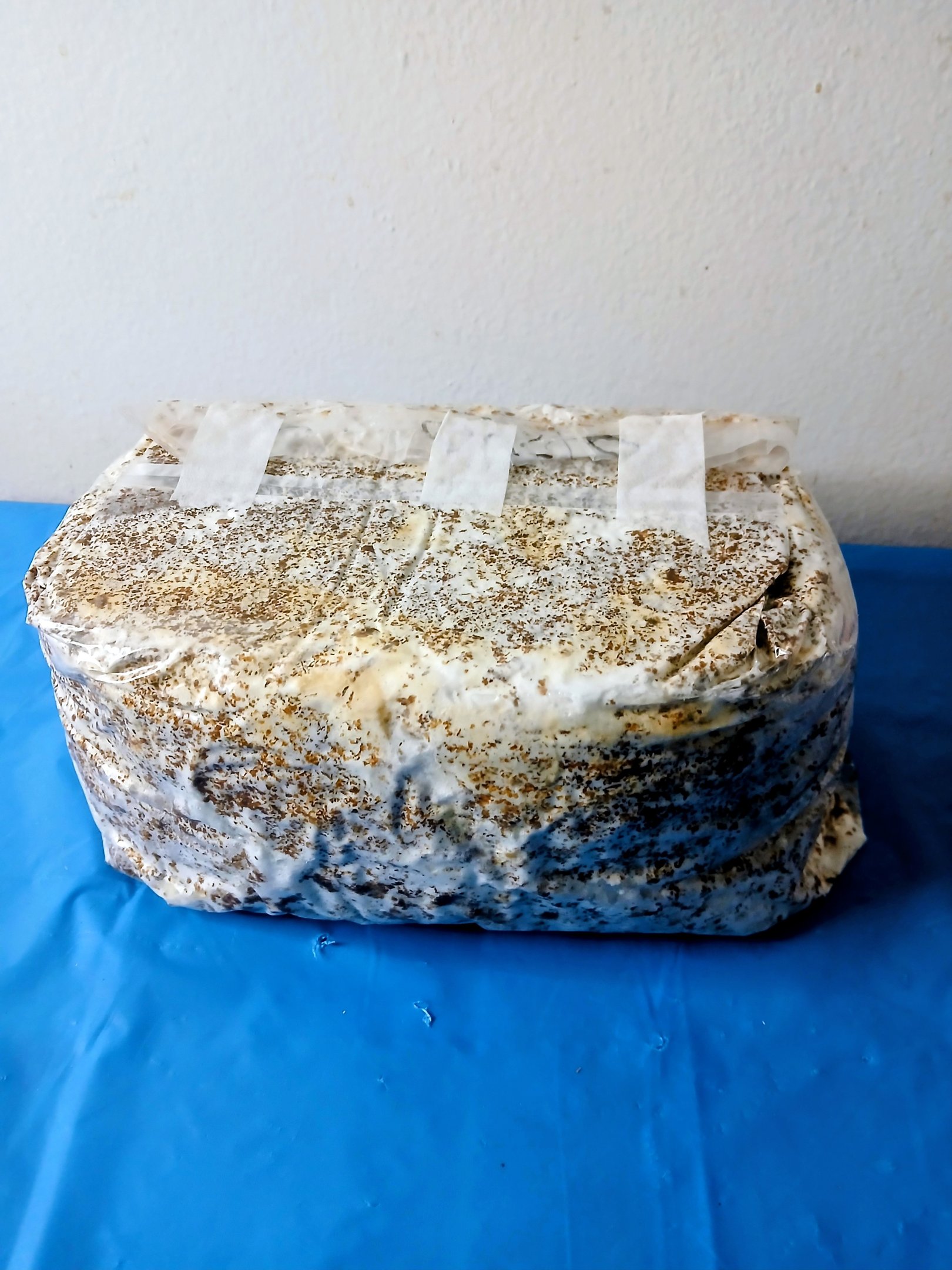
✅ The block/bag looks fully colonized (mostly white)
✅ Mycelium looks thick/healthy (not patchy)
✅ No obvious contamination (green/black/orange/gray fuzz)
Rule of thumb: If you’re not sure, wait a couple days. Oysters don’t mind being a little over-colonized.
Step 1: Choose where you’ll fruit it
You have a few options.
✅ Option 1: Kitchen / room (simple)
A lot of beginners can fruit oysters right in a room with decent airflow.
Best if:
you can mist regularly
the air isn’t super dry
✅ Option 2: Shotgun fruiting chamber / tub
This works too, but oysters can overgrow quickly and need FAE.
✅ Option 3: Martha tent (best results)
If you have a tent setup, oysters love it.
But don’t worry — you can absolutely get a great flush without one.
Step 2: Cut the bag (X cut vs slit vs U cut)
This is the part everyone stresses over… and honestly, you can’t “ruin” the grow with the wrong cut.
✅ The most common cut: the X cut
I usually recommend a simple X cut on the side of the bag.
Why X cuts work well:
the bag stays closed enough to hold humidity
but open enough for mushrooms to push through
mushrooms usually form nice clusters
Other cut options
straight slit: works fine
U cut / flap: works, but can dry out more if too open
Keep it simple: X cut is the easiest and most forgiving.
Step 3: Humidity — misting and keeping the bag from drying out
Oysters want high humidity while they’re pinning and growing.
What I do:
mist the inside of the bag (or the area around the cut)
mist the air / tent walls
avoid soaking the mushrooms directly
Important: You don’t want standing water pooling inside the bag. Moist is good — swamp is bad.
If your environment is dry:
✅ mist 2–4 times per day
If it’s humid already:
✅ 1–2 times per day can be enough
Step 4: Fresh air exchange (FAE) is the #1 key with oysters
If you only remember one thing from this entire post, it’s this:
Oysters need fresh air more than they need perfect humidity.
Signs you need more fresh air:
long skinny stems
tiny caps
“fuzzy feet” (white fuzz climbing the stems)
How to increase FAE:
open the bag more
cut another small hole
crack the tent/room airflow
use a fan (not blowing directly on the block)
Step 5: Light (don’t overthink it)
Oysters don’t need strong grow lights.
They just need:
✅ indirect light
✅ a day/night cycle helps
A window with indirect light works great. Avoid direct sun — that dries them fast.
What pins look like (and how fast they grow)
Once fruiting is initiated correctly:
pins often appear in 3–10 days
after pins form, mushrooms can explode in size fast
This is why it’s important to check daily — oysters can go from “tiny pins” to “ready to harvest” quicker than you’d think.
Common mistakes beginners make
1) Not enough fresh air
This is the big one.
2) Bag dries out
If the block dries out, pins stall.
3) Over-misting and soaking
Over-misting causes bacterial issues and ugly fruits.
4) Freaking out over small imperfections
Some clusters will be perfect, some weird. That’s normal.
How to know it’s working (good signs)
✅ thick healthy pinset
✅ caps start forming nicely
✅ mushrooms look like little umbrellas
✅ steady growth daily
Once you see pins, you’re basically “in the clear” — you just need to maintain humidity and fresh air.
Final note: keep it simple and stay consistent
Oyster mushrooms are one of the most forgiving gourmet species you can grow.
If you:
cut the bag
keep humidity decent
give lots of fresh air
…you’re going to get mushrooms.
Want help troubleshooting?
If your grow kit stalls, looks weird, won’t pin, or you’re dealing with contamination / slow growth, I put together a simple guide to help you troubleshoot and rescue a grow:
👉 Rescuing Your Mushroom Grow Kit: A Troubleshooting Guide (link)